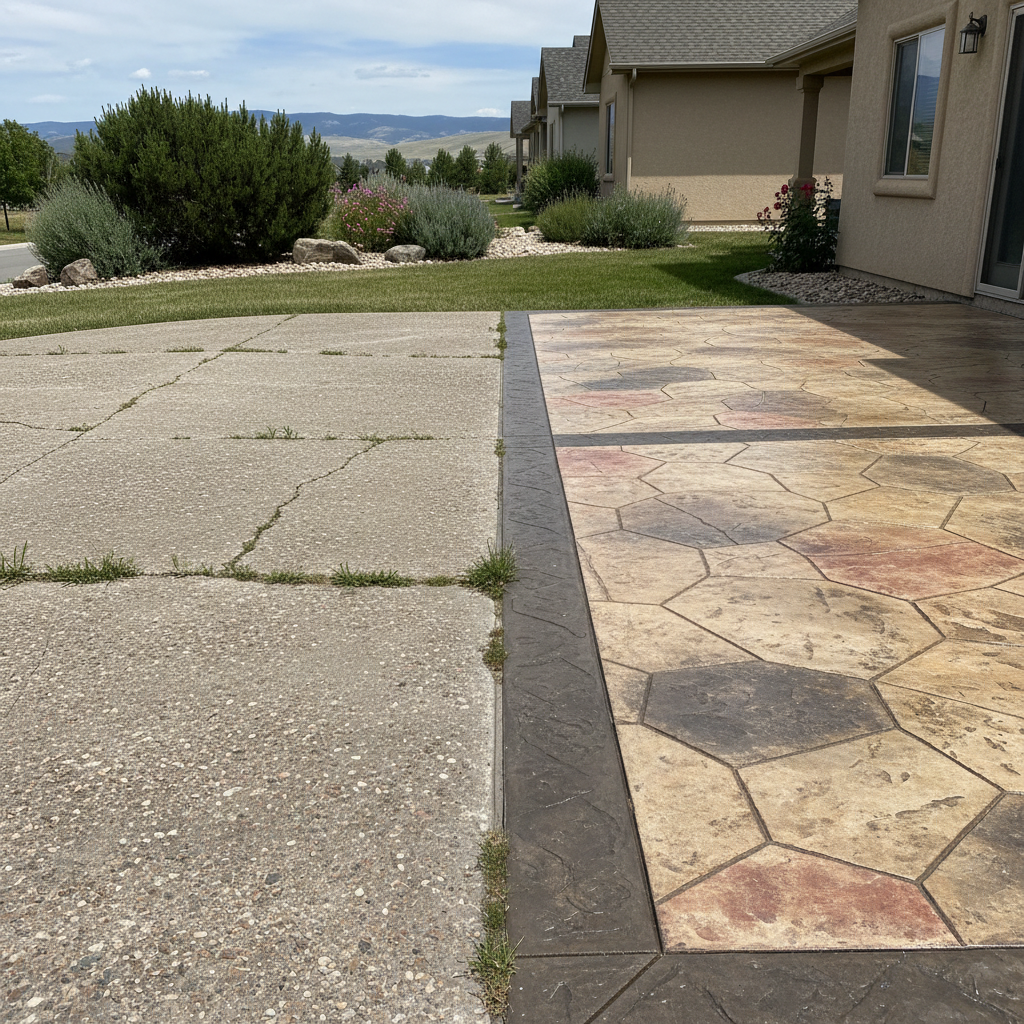
Thinking about sprucing up your patio, driveway, or walkways? And you want something a bit more interesting than just plain gray concrete? Good call! Decorative concrete really boosts curb appeal and adds value to your home. But with so many choices out there, how do you even pick one? Today, I want to dig into two popular options that often leave homeowners scratching their heads: stamped concrete and exposed aggregate. Both look fantastic, but they're quite different once you get past the surface.
So, What's the Deal with Stamped Concrete?
Stamped concrete is all about making concrete look like other materials. We pour fresh concrete, let it firm up just a bit, then press large, flexible mats right into the surface. These mats have patterns and textures that mimic natural stone, brick, wood planks, or even slate. After we stamp it, we usually add color. Sometimes that's a base color mixed into the concrete itself, and then a release agent gives it a secondary, often darker, color that really makes the texture pop. Once everything's cured and cleaned, we seal it up tight.
And Exposed Aggregate?
Exposed aggregate is a whole different animal. Instead of stamping a pattern, here we're showcasing the natural beauty of the stones – the 'aggregate' – that are already mixed into the concrete. We pour the concrete, and then, while it's still wet, we either wash away the top layer of cement paste or use a special retarder to keep the very top from setting too fast. This process brings out the colorful, textured pebbles, crushed stone, or even shells that are in the mix. It gives you a very natural, organic look, you know?
Let's Talk Appearance: What's Your Style?
With stamped concrete, your design options are pretty much endless. Want a patio that looks like flagstone? We can absolutely do that. A driveway that resembles old-world cobblestone? Yep. We can customize the colors too, so it matches your home's exterior perfectly. It's a very deliberate, designed look.
Exposed aggregate, on the other hand, leans more rustic and natural. The final look really depends on the type and color of aggregate we use. You might get a speckled, earthy tone with brown river rocks, or a brighter, more varied look with multi-colored granite. It's less about mimicking something else and more about letting the raw materials shine. Plus, it has a great, slip-resistant texture, which is a huge bonus, especially with our Logan winters and the occasional ice.
Durability and Longevity: How Long Will It Last?
Both options are incredibly durable; that's why concrete is such a popular choice in the first place. They'll stand up to our hot summers and freezing winters much better than pavers or wood decking ever would.
Stamped concrete is tough, no doubt. But because it has those deep patterns, it can sometimes be a bit more prone to surface wear in high-traffic spots if you don't maintain it properly. The colors can also fade over time if it's not sealed regularly, especially with the strong UV rays we get here in Cache Valley. And cracks? They can be a little more noticeable because they break up the pattern.
Exposed aggregate is exceptionally durable. Since the aggregate itself is exposed, it's super resistant to abrasion and wear. It handles heavy traffic incredibly well, and because of its natural, mottled look, minor imperfections or small cracks tend to just blend in more easily. It's a real workhorse, that's for sure.
Maintenance: What's the Upkeep Like?
For both, regular cleaning is essential. A good power wash once a year will keep them looking fresh. The biggest difference in maintenance comes down to sealing.
Stamped concrete really benefits from resealing every 2-3 years. This protects the color, enhances the finish, and helps prevent staining. If you skip sealing, you'll definitely notice the color dulling, and it'll be more likely to absorb spills.
Exposed aggregate also benefits from sealing, maybe every 3-5 years, but it's often a little less critical for its long-term appearance. The natural stone isn't going to fade like a surface color might. The sealer mostly protects against staining and just makes the aggregate's natural sheen pop.
Cost: What's the Price Tag?
This is where things can get a bit tricky, as prices always vary based on complexity, size, and current material costs. Generally speaking, exposed aggregate tends to be a bit more budget-friendly than stamped concrete. The process is usually a little less labor-intensive, and the materials (the aggregate itself) might be slightly less expensive than the specialized stamps and color treatments needed for complex stamped patterns.
Stamped concrete, especially with intricate patterns and multiple colors, can be on the higher end of decorative concrete options. You're paying for the artistry and the detailed labor involved in creating those realistic textures, after all.
My Recommendation for Logan Homeowners
Alright, so which one should you choose? Based on what I've seen working with concrete here in Logan for years, especially with our freeze-thaw cycles and the heavy use many families put their outdoor spaces through:
Go with Stamped Concrete if: You really want a specific, high-end look that perfectly mimics natural stone or brick. You're willing to commit to regular resealing to protect that aesthetic. You want a truly custom, unique design statement.
Consider Exposed Aggregate if: You're looking for a natural, understated, and incredibly durable surface. You prioritize slip resistance, especially around pools or on sloped driveways. You want something that's a bit more forgiving with maintenance and wear over the long haul. It's a fantastic choice for areas like the East Bench where you might have more natural landscaping and want something that blends in.
Honestly, both are excellent choices and will significantly upgrade your home. At Kingdom Concrete Contractors Logan, we've installed miles of both, and we're happy to walk you through samples and help you visualize what each would look like at your place. It really comes down to your personal style, your budget, and how much maintenance you're willing to do. Don't hesitate to give us a call to chat about your project. We're here to help you make the best decision for your home.